
Animal Advocacy in Kenya: Opportunities For Impact
Acknowledgements
Many thanks to many Kenyan animal advocates we spoke with for this report and for all of the hard work of animal advocates across Kenya for their tireless work improving animal welfare.
Author: Max Carpendale, Ben Stevenson
Download PDF Version
Animal advocacy in Kenya: executive summary
The Constitution of Kenya assigns the national and county governments responsibility for “the protection of animals and wildlife” — and this responsibility is shared with a network of animal advocates. Unfortunately, the broad responsibilities have not yet translated into comparable practical legislation or improvements in the material conditions of animals. Kenya experiences large-scale animal suffering with tens of millions of farmed chickens, fish, goats, sheep, and cows raised under relatively poor welfare conditions with weak legal protections. By default, these problems will worsen in the coming years as population and economic growth drive increased demand for animal products.
Animal welfare in Kenya remains an under-resourced and overlooked social cause, so it is critical that advocates pioneer the most cost-effective opportunities for impact. This report seeks to identify promising interventions. We believe that the high priority avenues for impact might include the following:
improving the commercial chicken industry: 1) Only one in five poultry farmers are known to follow Kenya’s voluntary Chicken Code of Practice. We recommend legislation, especially in high priority counties, which mandates either the Code of Practice or similar welfare measures. 2) Kenya’s layer hen industry remains largely cage-free, but there is a strong risk that many farmers adopt cages in the immediate future. We recommend cage-free campaigning, either by securing retailer commitments to buy exclusively cage-free eggs or by building a supportive network of cage-free farmers;
introducing a code of practice for farmed fish: Kenya’s aquaculture industry is both rapidly growing and rapidly intensifying through cage culture on Lake Victoria. Kenyan legislation and current farming practices largely neglect the welfare of these animals in a number of ways. We think could be well covered by a code of practice governing the farming of them;
capacity building and enforcement for humane slaughter: While Kenyan legislation is clear that animals should be stunned before slaughter, this is often not practised, and when it is practised it is often unsuccessful in rendering animals unconscious. This represents a highly leveraged way of improving the welfare of a large numbers of ruminant animals in Kenya, with strong One Health arguments in favour of it;
vaccinating backyard chickens against Newcastle disease:Four in five chickens in Kenya are raised by backyard or smallholder farmers, and it is very common for them to die painfully from Newcastle disease. This disease is hard to treat but easy to prevent, as it has an effective vaccine. Vaccine uptake is low for several reasons, including ‘last mile’ logistics, and we believe animal advocates could effectively increase vaccination rates by coordinating vaccination drives; and
policy work to improve the efficacy of wild animal disease reduction: We generally recommend that Kenyan animal advocates focus on farmed animals, but some advocates might be well-placed to work on improving wild animal welfare. Kenya already has strong laws on species conservation, which could be leveraged to promote policy on individual welfare. In particular, Kenya’s Wildlife Service has committed to a 40% reduction in wildlife diseases by 2030, but it’s not clear that this work will be adequately resourced. We recommend animal advocates explore ways to help KWS meet its target, which we expect will help normalise wild animal welfare.
Table of contents
Welfare issues:
Farm animals in Kenya overview
The highest priority animal welfare issues occur when the largest number of animals are afflicted with the greatest amount of suffering. Based on the National Agriculture Production Report 2024, we have identified the following farm animal populations:
Animal | Alive at any one time | Killed per year |
Chickens (total) | 67M | 67M |
Fish (total) | 59M | 90M |
Goats | 35M | 6.5M |
Sheep | 23M | 3.4M |
Cows | 22M | 1.9M |
The majority of these animals are farmed for meat, but many chickens are either ‘dual-use’ or raised for eggs; sheep are raised for hair and wool in addition to meat; and about 5.5M cows are farmed for milk. Animals raised for other purposes are still typically slaughtered for meat at the end of their productive lifespan.
Kenya also farms billions of insects (around 50B bees), as well as millions of camels and donkeys; hundreds of thousands of pigs, rabbits, ducks, turkeys, pigeons and geese; and tens of thousands of guinea fowl, crocodiles, quails, ostriches, and doves. Please see the appendix for full population numbers.
How much do these animals suffer? Further research is needed to better understand the welfare of these animals, but we have collected information about typical farming systems for chickens, fish, and ruminants. Our research included site visits, interviews with farmers and local advocates, and reviews of published literature.
Chickens
There are 67 million chickens alive in Kenya at any one time:
54 million (80%) indigenous chickens, who are primarily ‘dual-use’ (farmed for eggs and meat); and
12.7 million (20%) exotic or hybrid chickens, including:
5.5 million broilers (farmed for meat);
6.4 million layer hens (farmed for eggs); and
800,000 dual use chickens (KALRO Kienyeji, Kroilers and Kenbro types) (1).
The populations of indigenous chickens and exotic/hybrid chickens have grown at broadly similar rates (average year-on-year growth rates of 7% and 9% between 2011 and 2019, respectively). But, notably, this corresponds to a more significant absolute increase in the indigenous population than the exotic/hybrid chicken population (total increases of 21 million and 5.5 million between 2011 and 2019, respectively) (2)). More recently, the indigenous chicken population has continued to increase (11.3% between 2022 and 2023) while the exotic/hybrid chicken population has fallen (1). This may be because many consumers prefer indigenous chicken meat for its better taste and perceived health benefits. Nevertheless, exotic/hybrid chickens continue to produce a moderately disproportionate amount of meat and eggs – around 30% (3).
Indigenous chickens are mostly kept in small-scale backyard or free-range operations. Reports suggest that between 65% (4) and 75% (5) of households keep at least one bird, and that the average flock size is around 15 chickens (3). They are preferred for backyard production systems due to their hardiness and they’re left to scavenge for some food to reduce feeding costs, though food waste and locally harvested cereals are also provided. Because they are typically not confined, they are able to live more naturalistic lives, which represents an immense welfare improvement compared to intensive conditions. However, the trade-off is that veterinary care and vaccination are both rare, with Newcastle disease vaccination rates varying regionally but reaching as low as 15% (6). These issues, which stem from accessibility problems, affordability problems and knowledge gaps, compromise the health and welfare of backyard birds, resulting in survival rates to eight weeks as low as 10% (7). In contrast, exotic and hybrid birds in Kenya are farmed under intensive conditions.
The broiler farming industry is relatively concentrated and vertically integrated with the country’s largest hatchery, Kenchic, operating around 60 to 70 contract farms. Broilers are typically farmed near highly populated urban areas. They are typically sold at 5 to 8 weeks at a weight of 1.5 kg. These chickens have a much lower risk of Newcastle disease because disease management tends to be better on commercial farms; in one survey, 90% of farmers practiced vaccination, 30% practiced isolation of sick birds, and 23% treated sick birds (8). Major on-farm welfare issues include pneumonia, coccidiosis and water belly, as well as overcrowding and poor feed. Exotic chickens may be raised in deep litter systems or battery cages; we are unsure of the relative frequency of battery cages, though they seem perhaps less widely used than in other African countries. Broilers can be transported in dangerous, overcrowded conditions; slaughtered without stunning; and sold live at market.
Kenya produces around 200 million eggs annually, with large variance year-to-year (1). The layer hen industry is less concentrated and somewhat less geographically clustered than the broiler industry. It is relatively rare for egg farms to use cages – estimates are scarce, but perhaps 30% of layer hens are caged – but they are most common among wealthier farmers, and likely to become much more common in the immediate future. Preventing the take-off of cage farming should be a priority for Kenyan animal advocates. Layer hens face welfare threats beyond cages: one study of egg farms across Muguga, Nyathuna and Kabete found very high mortality rates with a mean of 38% across sites. This was mainly caused by Newcastle disease and Gumboro, as well as by cannibalism. This may be exacerbated by excessively high stocking densities with a mean stocking density of 10 birds/m2 found across sites (9). Site visits by Healthier Hens to 33 farms across six counties identified biosecurity, thermal stress, feed/water access, and veterinary support as the most significant remaining welfare issues (10).
Farmed fish
We estimate that there are 41.3m tilapia, 9.7m rainbow trout, and 7.8m African catfish alive at any one time in Kenyan farms. Along with a smaller number of other species farmed corresponding to 4% of the total production per year of 33,423mt in 2024 (11).
In 2024 there were 64,818 fish farmers across the country. These farmers control 96,568 ponds, with approximately half of the ponds stocked. A smaller number of 634 farmers control the 5,975 cages in the country. Almost all cage farming happens in Lake Victoria, with these cage farms spread across the counties bordering Lake Victoria as shown in the following table (11).

Source: (11)
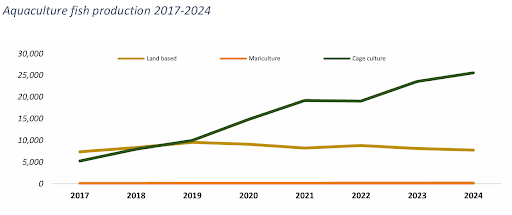
The proportion of production from cages has increased rapidly, now accounting for approximately 75% of production, in comparison to 2017 when it accounted for a minority of production. Cage systems represent a more intensive method of production and can be characterised by very high stocking densities (12).
Source: (11)
Aquaculture production has been pushed by foreign investment, as well as the domestic government as part of the Blue Economy program. The government provided subsidies from 2009 to 2013 for farmers to set up new aquaculture operations, as one pillar of the Economic Stimulus Program (13).
Production hit a local high as a result of this program in 2014 with 24,000mt, before decreasing for a few years due to a variety of factors, such as a lack of follow through, and continued support from the program (1,13). However, since then it has risen quite sharply, hitting 33,423mt in 2024 (11).
This was dovetailed with the, “eat more fish campaign”, which aims to increase the domestic consumption of fish. Consumption of fish had been somewhat higher before the collapse of the Lake Victoria fisheries, but it is currently very low (lLess than ¼ of the global average) (13).
Tilapia is farmed in both ponds and cages. African catfish is typically farmed in ponds, sometimes in poly culture with tilapia. There is also limited RAS (recirculating aquaculture systems) cultivation of both species (14). In contrast, trout are mainly farmed in the highlands of Kenya, especially near Mount Kenya, primarily to supply hotels serving foreign guests. They are mainly cultivated in raceway systems (15). The concentration of the industry and promising expat market for higher welfare fish suggests that focusing on trout could be promising, though this would need further investigation. Additionally, Kenya farms smaller numbers of carp and has pilot aquaculture programs for Nile perch, Ningu, and marbled lungfish (13).
Kenya does not export significant numbers of fish as domestic production does not meet domestic demand. In 2024 8,616mt of fish were exported, mainly to DR Congo, Italy, Netherlands, China, Spain, and Portugal. However, most of this was wild caught fish (11).
Imports are also low at 9,960mt, with most coming from Tanzania, China, South Korea, and Taiwan (11). Imported frozen tilapia tends to be cheaper than locally produced tilapia (approximately 200ksh/kg compared with 320ksh/kg), which is a competitive difficulty for local producers (16).
Ruminants
Ruminants in Kenya are farmed for meat, milk, hair, and wool. In 2023, there were around :
35 million goats:
34 million raised for meat; and
600,000 raised for dairy.
23.2 million sheep (sometimes classified together with goats as ‘small ruminants’):
22 million raised for meat and hair; and
1.2 million raised for wool.
22 million cows:
16.4 million beef cows; and
5.5 million dairy cows.
(1)
95.8% of cows are indigenous breeds. Indigenous goats and sheep have begun to be cross-bred with exotic breeds who are considered more resilient to disease and climate risks (17).
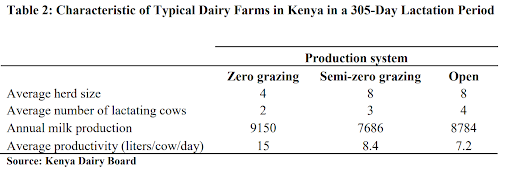
The informal segment represents 80% of the dairy industry. Around 90% of dairy cows are raised in the highlands of Central Kenya and the Rift Valley, which benefit from vegetation and biannual rainfall. The majority are raised by smallholder farmers, who typically own one to five cows and have low milk yield (18). Dairy cow farming systems tend to be either intensive (zero grazing), semi-intensive, or open grazing; reports vary, but between 28% (SDL 2020) and 35% are in zero-grazing systems (4). Vaccination is more common in zero-grazing systems, but remains infrequent, and lack of access to outdoors and space represents a very serious welfare issue (4). We note therefore that the prevalence of this method of raising cows is a concerning trend.
Source: (18)
More than 76% of small ruminants (19), as well as 34% of beef cows (17), are raised by pastoralist farmers in the arid and semi-arid lands (ASALs). This farming system is extensive and mobile, with nomadic farmers guiding their livestock along trading corridors. Ruminants mostly graze on available vegetation; one study found that 80% of pastoralist farmers had no feed costs (20). As well as a deep cultural significance, pastoralist livestock agriculture contributes around 12% of Kenya’s GDP (20). The government has several active strategies to enhance sector productivity.
Beef is the most popular red meat, with goat and sheep meat representing only about 30% of consumption (17). Around two-thirds of Kenya’s red meat is sold and marketed through formal channels and the market is mostly urban, with Nairobi and Mombasa projected to consume about 40% in volume by 2050. Nevertheless, goat and sheep meat is a more valuable export product, at around four times the market size of exported beef, and supply may be shifting towards smaller ruminants because they are less vulnerable to climate risks (17). Small ruminants provide farmers with regular cash income, but also capital for insurance.

Source: (17)
Welfare risks to extensively farmed ruminants include poor feed and disease. As well as increased susceptibility to disease, undernourished ruminants can lose weight and, in extreme cases, die (21). On average, around 66% of small ruminant mortalities are attributed to disease (20). Reliable information is difficult to find, but respiratory and intestinal diseases, especially contagious caprine pleuropneumonia, are considered the most common threats to small ruminants (21). Our research suggests that the main bottlenecks to vaccination have been price and accessibility; in particular, pastoral farming in ASALs greatly complicates ‘last mile’ delivery logistics.
To improve the productivity of pastoral farming, as well as to secure access to more external markets, in late 2024 the Kenyan government announced a commitment to increase vaccination rates from 10% to 85% for 22 million cattle, 23 million sheep, and 35 million goats by 2027 (22). The scheme focused on six priority diseases – foot and mouth disease, peste des petits ruminants, contagious caprine pleuropneumonia, contagious bovine pleuropneumonia, rift valley fever, and blue tongue – and delivered 7.4 million vaccines by March 2025 (source: personal communications). Unfortunately, the campaign was undone by financial constraints with a funding gap of Ksh 3.95 billion by May 2025.
Given the seriousness of disease for extensively farmed ruminants, we explored whether animal advocates should support restoring funding to Kenya’s livestock ruminant vaccination campaign. We concluded that the Kenyan animal advocacy movement is too funding-constrained to solve this problem directly, and that the political issue is likely to be too intractable to solve indirectly. Nevertheless, we would be pleased to see advocates working on this issue, which we think is a win-win for farmers, and animals, and a rare opportunity to effectively help extensively farmed animals.
Kenyan animal welfare legislation
Kenya is in an unusual position among countries in that its most important animal welfare legislation is currently pending. In this section, we first summarise the existing primary legislation – principally, the Prevention of Cruelty to Animals Act – and then summarise important upcoming legislation — most importantly, the Animal Welfare and Protection Bill, 2025.
The Constitution of Kenya gives the national government control over hunting, fishing, and protecting wild animals and the environment. It gives county governments control over agriculture including animal husbandry and welfare, animal disease control, and veterinary services. In practice, however, most legislation relating to animal health and welfare is national legislation (as article 186 and 187 allow it to retain these powers) (23).
Note also that Kenya is a member of both the East African Community and the African Union, both of which can also pass animal welfare legislation. For example, it recently made it illegal to slaughter donkeys for their skin (24) and the East African Community put forward a EAC Livestock Policy (25).
Enforcement of existing animal welfare laws is a serious problem in Kenya. For example, requirements for humane transport of animals and humane slaughter of animals appear to be rarely followed (26). Though this may stem from a lack of resources or knowledge of good animal welfare practices, it appears to us that farmers and handlers are often interested in learning more about humane practices.
Current legislation
The Prevention of Cruelty to Animals Act (27) was first passed in 1962 and has been updated several times. It now recognises the capacity of all vertebrate animals to suffer. The Act prohibits both acts and omissions (i.e. failures to act) which cause animal cruelty, including but not limited to:
beating, kicking, and torturing an animal;
starving or denying water to an animal;
confining or impounding an animal in a way that will cause unnecessary suffering; and
failing to provide appropriate veterinary attention.
The Act distinguishes between cruelty to wild animals (e.g., it prohibits hunting any animal in a way that is likely to cause unnecessary suffering) and cruelty to ‘owned’ animals (e.g., owners have special responsibilities to provide clean housing, veterinary care, and to have animals “destroyed” when prolonging their life will cause unnecessary suffering).
The Prevention of Cruelty to Animals (Transport of Animals) Regulations, 1984 (Cap. 360) (28) supplements this by mandating that animals must be transported in ways that minimize their suffering including being fed and given water regularly, not overcrowded, secured, and transported in a way suitable for the species.
The only species specific animal welfare regulations is the KS 2945:2022 Chicken Code of Practice (29). It is very progressive, stating that the ideal stocking density is 2 sq ft. However, this code of practice is not mandatory and most farmers are not aware of its existence with only 21% found to actively be in compliance with it (30). This document could be referenced in future county level and national legislation to get more official and binding status.
The Fisheries Management and Development (Aquaculture) Regulations 2024 (31) is the main legislation governing aquaculture in Kenya. It defines “responsible aquaculture development” as those that promote the health and welfare of the animals, including minimizing harm to wild animals. Most notably, it also mandates that a national aquatic animal health and welfare monitoring plan should be implemented and that it should fulfil Kenya’s regional and international commitments in this area.
World Animal Protection writes that “there is room for improvement in many domains related to animal welfare” in Kenyan law (32). In particular, the Prevention of Cruelty to Animals Act (27) is outdated in several ways. For example, the fines are too low to effectively deter breaches from larger companies (most are around 200,000ksh).
Additionally, the only specific and binding regulations for animals are for transport (28), with none for working, farm, fish, companion, or research animals. While this legislation does prohibit the very worst practices in transport, it is generally outed and lacks specifics such as maximum journey times and maximum densities of animals during transport. Additionally, compliance with this legislation is particularly uncommon.
Pending legislation
The Animal Welfare and Protection Bill (2025) is due to replace the outdated Prevention of Cruelty to Animals Act 1962. This act is more progressive, recognising the capacity of all animals (including invertebrates) to suffer, having specific provisions for aquatic animals, and recognising the Five Freedoms. The Act will mandate pre-slaughter stunning and specify that aquatic animals must be kept in sufficiently oxygenated water. It will also mandate the creation of national and county level Animal Welfare Advisory Committees, which are to be staffed with a specific breakdown of veterinarians, government officials, industry representatives, and animal welfare organisation staff.
In addition to this there are several other pieces of relevant pending legislation:
Animal Health Bill, 2025 (33): defines animal health as “a state of complete physical well-being and optimum welfare of an animal”. Defines “animal disease emergency” to include situations of extreme suffering to animals.
Livestock Bill, 2024 (34): states animal welfare as an objective of the bill. Regulates animal feed including mandating having a licence to produce feed and mandating that feed produced must meet its standards.
The Veterinary Practice and Veterinary Medicines Bill, 2024 (35): mandates that slaughterhouses must adhere to high levels of hygiene. Mandates that people should not distribute unsafe food, defined as food hazardous to human or animal health.
Top opportunities for improving animal welfare in Kenya
Honourable mention: Improving legislation
As noted earlier, there is unusually strong pending legislation in Kenya either directly concerning animal welfare or indirectly relevant to it. In light of this, it seems particularly important that groups work on preventing undue delays in the legislation while also consulting with the government to ensure that it makes it legislation in its strongest form.
While we think this is an impactful opportunity, we do not have anything further to contribute to forming and shaping this, so we are including this only as an honourable mention.
Improving in the commercial chicken industry
Background
Around 20% of Kenya’s chickens are raised by the commercial poultry industry (the remaining 80% are backyard chickens). Slightly more than half are broilers, and slightly less than half are layer hens. Broiler farms are highly clustered around urban and peri-urban areas. Both chicken meat and eggs are expected to see increased demand, driven by population growth, economic growth, and urbanisation.
The hatchery market is highly concentrated: four firms produce most day-old chicks with the largest, Kenchic, supplying over 50%. There is heavy vertical integration with the broiler market; for example, Kenchic has around 60 to 70 contract farms, each housing between 3,000 and 12,000 broilers, as well as around 30 franchise outlets that sell chicken meat directly to consumers. Kenchic has strong influence over its contract farmers’ operations (in one study, 90% of Kenchic farmers said that health and safety training had improved their productivity (36).
Layer hen farms purchase day-old chicks from the same hatchery businesses as broiler farms, but there is less vertical integration as the hatcheries do not operate layer farms at the same scale. Although it charges a slight premium, Kenchic dominates the layer hen day-old supply with chicks that are vaccinated and perceived as high quality (37). Cages remain relatively rare; in a survey of County Directors of Veterinary Services, 94% indicated that battery cages are not common (38). But we expect that a disproportionate number of hens, perhaps around 30%, already live in cages because the largest farmers are the most likely to already use cages, and we expect that many more farmers will adopt cages in the short-term future. Evidence is scant on the pace of intensification but it could be fast: according to one estimate, 20% of Nigeria’s layer hen population was caged in one year.
Unfortunately, animal welfare is not perceived to be a priority for either farmers or consumers at present. In the survey of County Directors of Veterinary Services, 70% indicated that farmers are more interested in profits than welfare, and 84% indicated that consumers were not interested in welfare (38). The problem is exacerbated by insufficient farm animal welfare legislation and a lack of farmer knowledge on welfare issues (e.g., in a study of Kikuyu subcounty, a substantial minority of 41% indicated they were not aware of animal welfare issues (8)).
We recommend:
legislation to improve farm chicken welfare, especially at county level; and
campaigning to encourage farmers not to adopt cages.
Legislation, especially at county level
At present, there is insufficient legislation to protect farmed chickens. As well as The Prevention of Cruelty to Animals Act and the Transport of Animals Regulations (discussed above), farm chicken welfare is covered by:
The Chicken Code of Practice, which is very progressive (e.g. stating an ideal stocking density of 2 ft), but non-mandatory and only followed by 21% of farmers (30); and
The Poultry Development Bill 2012, which primarily aims to enhance industry prospects but also mandates “the review, awareness creation and enforcement of … animal welfare standards”. These were never established as a binding regulation.
We encourage advocates to push for stronger national legislation, especially by making the Code of Practice provisions mandatory, but we especially recommend advocating for county-level legislation. Currently, there is no county-level chicken welfare legislation, although there have been at least three relevant bills proposed.
In Nakuru, a County Animal Welfare Bill proposed in 2021, as well as establishing an Animal Welfare Committee, would have ensured that:
chickens are not tied by the neck, legs or wings; or carried by the head, neck, wings, legs or tail;
chickens are transported in appropriately designed receptacles (e.g., lower layers are protected from falling excrement); and
when transporting chickens, they will not be overcrowded, their heads, wings, legs, and feet will not be trapped in the mesh, and they will not be driven for more than 6 hours without food or water.
We understand that this Bill has been enacted and is proceeding to publication stage. As recently as September 2025, Africa Network for Animal Welfare have been engaging with Nakuru legislators to ensure the Code of Practice provisions are codified in the law (39).
Elsewhere, relevant bills have been proposed in Nairobi and in Kaijado, but there is no record that they have proceeded. The Nairobi law would ensure that chicken farmers provide:
adequate light and air quality; as well as good quality flooring, bedding, and resting surfaces;
acceptable stocking density;
footbaths for biosecurity;
premises that secure against ‘vermin’, rodents and wild birds, and flooding; and
premises that are separate from human housing, pig housing, and which separate different species and ages of poultry.
We believe that advocating for county-level legislation could be especially high leverage because:
the poultry industry is concentrated in Kenya’s urban and peri-urban areas. For example, Kenchic mandates that its contract farmers are no more than 50km from Nairobi city centre (37) or 100km from Ngoliba processing plant (40). Targeted legislation in these regions could be especially impactful. The table below indicates the areas with most broiler and layer farming; and
legislation in urban counties might be more tractable than national legislation because new national legislation on animal welfare has stalled for years, and as a result of urban populations who are often more willing to support animal welfare measures.
Broiler | Layer |
Kiambu | Thika |
Thika | Kiambu |
Nairobi | Maragua |
Nakuru | Nakuru |
Kisumu | Nairobi |
Machakos | Kilifi |
White indicates an urban area. Yellow indicates a peri-urban area. States categorised by Animal Ask, and identified by ANAW (38) | |
On the other hand, tractability might be a disadvantage of this recommendation; counties have so far deferred to national legislation on animal welfare, so it is possible they would not advance new chicken welfare measures.
More specifically, we would advise introducing bills in counties with high levels of poultry farming, copying the language of the Nairobi bill or the Chicken Code of Practice as far as possible, and lobbying policy makers to pass the bills.
Campaigning for farms to remain cage-free
Cage-free campaigns have been some of the most cost-effective interventions in the animal welfare space; with around 70% of layer hens cage-free at the moment, Kenya offers a relatively unique opportunity to campaign for farms to remain cage-free, rather than transition towards cage-free. This might involve deploying tactics from conventional cage-free campaigning, such as pressuring hotels and retailers to go cage-free to ensure demand, or novel tactics for the African context, such as collaborating with farmers to secure a continued cage-free supply.
Campaigning against hotels has been the principal tactic for cage-free work in Africa so far; there have been around 17 hotel commitments secured in Kenya already (41). The key advantage is that this is low hanging fruit as hotels might be most willing to pay a premium for cage-free eggs. Additionally, we expect that hotels will be buying from the largest farms, who are most likely to adopt cages, so this might provide a highly leveraged pressure point. On the other hand, we are concerned that the hotel market is simply too small to establish a premium market for cage-free eggs and push the industry at large to disavow cages. At current margins, campaigning against hotels might be tractable and momentum–building, but we do not think it will be enough to prevent a cage take-off.
Advocates should explore ways to build on Kenya’s existing retailer cage-free commitment, from Carrefour (Majid al Futtaim), which has an estimated market share of 10% and is committed to sourcing exclusively cage-free eggs by 2032 (42). As well as being able to leverage an existing commitment, the key advantages to retailer campaigning include the following:
with a market size around $12 billion (43), the retail channel might be large enough to drive industry-wide change;
the retail market is relatively concentrated (see table below for estimated market shares); and
as with hotels, retailers buy from the largest farms who are the most likely to adopt cages.
On the other hand, a smaller proportion of food purchases flow through major retailers than in western markets, with 77% of consumer goods in Kenya bought at around 250,000 small stores (44). Additionally, it's unclear whether Kenyan consumers would pay more for cage-free eggs, which caps the potential premium market size. One choice experiment study conducted in Nairobi did find that consumers were willing to pay a price premium of 72% for animal welfare labelling and 135% for humane slaughter (45). However, we feel cautious about relying on these results because the study found that 92% of consumers said price was important to them and because the study design used unrealistic price intervals, which might inflate its willingness-to-pay estimates.
Concretely, cage-free retailer campaigners in Kenya might target Quickmart and Chandarana. These stores, which have estimated market shares around 23% and 10% respectively, have investment from foreign development finance groups, who might be amenable to arguments against factory farming. By contrast, Naivas, Kenya’s largest retailer, is privately owned by a Kenyan family. However, local advocates will be best placed to identify promising opportunities.
Capacity building and enforcement for humane slaughter
Kenya has clear legal requirements which stipulate that animals killed for food must be stunned before slaughter. Nevertheless, these requirements are seldom followed in practice. While determining specific complaints rates is difficult, field studies of slaughterhouses rarely mention the practice of stunning animals or even the presence of stunning equipment. Regional experts corroborate this observation, confirming that stunning is often not practised, especially at smaller slaughterhouses, and that when it is attempted it often fails to render animals fully unconscious.
Beyond the promise of existing legislation, we view this ask as a highly leveraged way of improving the welfare of the large numbers of extensively farmed ruminant animals in Kenya and because there are numerous strong One Health reasons to improve practices. Indeed, practices and facilities at slaughterhouses is an area in which animal welfare and human interests align particularly closely, with effects of current practices on worker safety, zoonosis risk, food hygiene, food quality, and export potential.
Overview of the industry
Kenya’s slaughterhouses are divided into export-orientated and local (domestic) facilities. Kenya has at least 10 export orientated slaughterhouses with significantly better practices and more reliable stunning (46). The slaughterhouses could serve as models for improved practices, though funding will of course be a limiting factor.
Local slaughterhouses are further divided into type A, type B and informal, roughly tracking their size and level of modernization (47). Typically these slaughter either ruminant animals, pigs, or both.
Chicken slaughter in Kenya is more complicated. Chickens are often slaughtered on-farm, either in private chicken slaughterhouses in the case of large farms or more informally in the case of small or medium-sized farms. Smaller or medium-sized chicken farms may instead sell their birds live at markets or slaughter their chickens at municipal slaughterhouses (pay per slaughter) (48). Ruminant and pig slaughterhouses have been better studied in Kenya, so the evidence in this section draws mostly from them.
The profit model of most Kenyan slaughter houses is typically ‘pay per slaughter’ with people paying a certain amount for each animal they want to have slaughtered at the facilities (49).
Overall, there is an urgent need for reform. A study by Kenyan Market Trust (50) found that an increase in slaughter fees of 100Ksh per animal could fund slaughterhouses modernization including stunning before slaughter. Their modelling found that this would be profitable for slaughterhouses within two to four years.
Legislation: both the present principal piece of animal welfare legislation, Prevention of Cruelty to Animals Act (Cap. 360) (27), and the pending The Animal Welfare and Protection Bill (2025) both require humane slaughter, including stunning before slaughter. Additionally, Meat Control Act (Cap. 356) (47) lays down more specific requirements for how they should be implemented in slaughterhouses. In a study in Western Kenya, Otoigo et al. (51) writes that “Many facility owners and almost all workers were unfamiliar with the Meat Control Act”.
Welfare issues
The principal welfare issues can be divided into 1) stunning and humane slaughter, and 2) handling and transport.
Stunning: Cook et al. (49) found only one of the 142 slaughterhouses sampled stunned animals before slaughter. The remainder cut the throats of animals whilst they were still conscious. Additionally, even when stunning devices are used, they may be unsuccessful. A study of a pig slaughterhouse in Kiambu county found that an astonishing 99.61% of pigs were insufficiently stunned (26). The stunning was performed with an improvised stunning device with corroded electrodes.
Slaughter slabs, where many animals in Kenya are killed, almost always lack access to electricity, making electrical stunning impossible. For example, Cook et al. (49) found that only 1.4% of slaughterhouses in Western Kenya had electricity. However, it is still possible for these facilities to use captive bolt guns for stunning.
Transport and handling: transport and handling of animals in Kenya could be greatly improved. Worker knowledge is poor (52), dedicated transport vehicles are often unavailable, and other methods are improvised such as the use of motorbikes (26,53).
Other issues
In addition to welfare issues, current conditions in Kenyan slaughterhouses present significant other societal risks and costs.
Meat quality and hygiene: animals who are stressed and in pain during handling and slaughter have lower quality meat because of loss of glycogen during the stress (54) and high microbial populations (55).
Worker safety: Kenyan slaughterhouses represent a greater risk to worker safety, documented by increased rates of injuries among Kenyan slaughterhouse workers. Repetitive manual labour, and especially the use of dangerous tools, on conscious, flailing animals represents a large risk to worker safety (56).
Zoonosis risk: slaughterhouse workers are exposed to many potentially diseased animals from the surrounding area or even other parts of the country. They are exposed to the bodily fluids of these animals if they have open wounds. This presents an acute risk of zoonosis, especially since both the animals and the slaughterhouse workers are in stressful conditions. Some of these universities may become transmissible human to human, posing a grave risk for broader society
Biosecurity and general hygiene practices of slaughterhouse workers are well documented as very poor, massively compounding this risk. In one study, only 31% of slaughterhouse workers were aware that they could catch diseases from animals and that only 35% of slaughterhouses had handwashing stations (49). Otoigio et al. (Otoigo et al. 2024) notes that workers often have to pay a significant amount for their own PPE, introducing a clear incentive not to use it.
Export: Kenya once had a thriving meat export market to the EU, exporting 400,000mt of processed beef annually (57). However, Kenya is no longer permitted to export the meat of land animals to the EU because of its failure to meet animal health and food safety standards. Among these is a requirement in Council Regulation (EC) No 1099/2009 that imported products meet ‘similar standards’ to chapter 2 and 3 of the regulations, which includes a stunning before slaughter requirement (58).
Introducing humane slaughter practices, amongst other improvements to slaughterhouse practices, could allow Kenya to regain this market once the industry is ready.
Recommendations and remaining uncertainties
While we remain excited about this ask, we note three significant difficulties to progress on it.
There is a backfire risk from modernizing slaughterhouses and improving worker practices in a way that raises costs too quickly. It has been observed that this can result in more animals being slaughtered informally (in even worse conditions) if people are unwilling to pay the increased costs (49). We therefore think that it is important to modernise in ways that do not significantly increase costs.
A second difficulty for this ask, is a high rate of worker turnover limiting the impact of worker training for improved welfare because workers may have limited time to master skills before being replaced by new workers who must be trained (56). This presents a problem as most attempts to improve practices and reduce animal suffering depend on appropriate worker training. An expert we spoke with noted that this has been a problem with this ask in other contexts. Though notably, slaughterhouses that improve practices might also expect to see lower rates of turnover because of improved worker safety. This is exacerbated by negative attitudes towards better practices by slaughterhouse workers (56)
11.2% of the population of Kenya is Muslim. While we are not aware of specific polling on the issue for Kenya, some Muslims view stunning before slaughter as impermissible and there is pressure for many slaughterhouses to accommodate the Muslim population in this belief (53). Having said this, there are strong arguments about why reversible stunning is halal, and indeed is more consistent with the underlying aims of halal slaughter to achieve higher welfare (59). We therefore do not think that this should present a substantial barrier to implementation of this ask, though it may mean that consultation with Muslim religious leaders is important.
Specific recommendations for improvements: Slaughterhouses in Kenya have significant improvement across many areas. However, we think the highest priority areas are as follows: each ruminant and/or pig slaughterhouse has either a captive bolt gun for stunning or better, that the stunning devices are in good repair, that the principal person responsible for using them is competent in their use, and can recognise when an animal has not been successfully stunned, and that a backup method can be used in that case.
Introduce code of practise for farmed fish
The aquaculture industry in Kenya is growing rapidly, driven by a sharp increase in cage farming in particular. This is happening alongside little awareness of fish health and welfare, meaning that current conditions may be particularly bad for them. It is very important that this growth and intensification is carried out hand-in-hand with the appropriate attention to animal welfare.
As an ask to address this, we propose the introduction of a code of practice for farmed fish in Kenya. This could start as a Kenya Bureau of Standards code, similar to the chicken code of practice. Alongside the drafting of the code, advocates could lobby and work with governments and producers towards widespread adoption of the code, focusing on cage farmers. Eventually the code could be adopted as regular, binding legislation.
Due to a backlog of important animal welfare legislation, we suspect that work to get this implemented as binding legislation might take some time. However, this time could be used to ensure that more farms are aware of the code and able to follow it. Early adopters of the code would be able to market their fish as a premium product.
The focus of this code should be the cage farming industry. This industry is more industrialised, concentrated, intensive, and will therefore be an easier and more impactful group to work with. Our analysis in this section therefore focuses on cage farmers.
This would build the promissory note in The Fisheries Management and Development (Aquaculture) Regulations, 2024 (31) to, “develop a national aquatic animal health and
welfare monitoring plan”, which would dovetail with a new code of practise for farmed fish.
We are also excited about this ask because there are many common practices that are not only bad for welfare, but very plausibly undermining farmer success, meaning that following the code could represent a ‘win-win’ proposition for farmers.
It is believed that poor management practices such as extreme overstocking and the use of poor quality feed may have contributed to a mass die off of 64 million tilapia in the Kenyan side of Lake Victoria between 2020 and 2022, at an estimated cost of 1.4 billion Kenyan shillings (12), highlighting the risks of improper aquaculture that have been seen globally.
Unfortunately, awareness of current certification standards is low among Kenya fish farmers, with only 37% aware of them. However, 65% of farmers in the same study expressed willingness to adopt these standards and a full 71% of farmers believe that adopting these standards would increase income (60). 48% of farmers also saw export potential as a significant benefit of certification, indicating at least an ambition in this direction. Overall, we take this as a positive sign that there is great willingness to improve practices and welfare, just a lack of education and means to do so.
Meanwhile, the bureaucracy associated with certification as well as the cost associated with it were listed as the most significant barriers to adoption. Work on this ask should be sensitive to these concerns, and to the other barriers described in (60).
The top sources for aquaculture best management practices were other farmers, the Kenya Fisheries Service, Kenya Marine and Fisheries Research Institute (KMFRI) and NGOs (Teplitz et al. 2024). (Ouma et al. 2024) details further data on sources of information.
Proposed reforms
We will now review the literature regarding the prevalence and severity of these welfare issues and how common farming practices contribute to them. The recommendations listed in this section should be taken as a sketch of what a final code of practice should resemble.
Feed: As with the farming of other animals in Kenya, lack of access to affordable, high-quality feed is the top complaint of fish farmers (61).This is a significant factor as fish feed accounts for 50% to 70% of production costs (13). This has confounding effects as fish nutrition might be lower, farmers may skip feedings, and fish might be fed with sinking feed that is not eaten before it sinks and causes eutrophication (61).
Perhaps a majority of fish farmers choose to manufacture their own feeds to save money, but this often results in less nutritional quality for the fish (13). This is further compounded by lack of farmer knowledge about good feeding practices, including not following a routine feeding schedule, poor storage and handling of feed, and purchasing inadequate feed.
Encouragingly, 97% of cage farmers use floating feed. However, 41% of cage farmers do not use a feeding ring, which ensures that feed remains in the cage rather than being dispersed across the lake (62). 27% of farmers reported feeding the fish only once daily and most farmers also report skipping feedings, with an average 2.8 feedings skipped per month (62).
Recommendations: |
|
|
|
Cage siting: poor siting of cage farms in the crowded Kenyan portion of Lake Victoria also contributes to lower water quality, as they are sited too close to other cages or sited at too shallow of a depth (especially at depths less than 6m) to allow proper water exchange (61). Aura et al. (63) notes a high prevalence of cages sited at depths under 5m. Another survey found an average of only a 2m gap between the bottom of the cage and the bottom of the lake, in addition to cages being sited in areas with low water exchange (64). Lack of water exchange is an significant contributor to poor water quality, setting these farms up for future failure.
Recommendations: |
|
Water quality: other improper management techniques including poor feeding practices, inappropriate siting of cage farms, not cleaning nets, the use of raw manure to fertilize the water, and overstocking contributes to poor water quality (Emam et al. 2025). Additionally, farmers typically do not treat water before adding it to their ponds (14).
The clearest mechanism for identifying this, in order to begin mitigation, is water quality monitoring. Teplitz et al. (62) finds that 93% of cage farmers do not test water quality during production cycles while Aura et al. (63) finds around 43% of cage farmers report not performing water quality monitoring. This is very unfortunate and there are indications of low water quality, such as 38% of farmers noticing fish gasping for air at the surface of the water (63).
Pond farmers have significantly worse practices and access to equipment. A broad countrywide survey (that included predominantly pond farmers) found only 12% had equipment for water quality monitoring (60). Additionally, a study of pond farmers (65), found the majority to be unfit for the rearing of fish due to poor water quality on one or more chemical parameters (especially ammonia).
Recommendations: |
|
Fingerlings: 90% of cage farmers do not breed their own fingerlings (62). Instead they are supplied by 127 hatcheries (2015 figure, see (66). Hatcheries report an average survival rate of 70% (14).
Biosecurity practices are significantly better at hatcheries than at farms (68), but disease might be the cause of the largest losses of stocks among hatcheries, and better practices are still needed (14). We found a minority of hatcheries undertaking vaccinations with (67) only 10% of sampled hatcheries practising vaccination and (68) just 41% of government hatcheries carrying out vaccinations. Additionally, only 75% of hatcheries report water quality monitoring, which represents clear room for improvement (69).
Recommendations: |
|
Stocking density: Obwanga et al. (69) and Aura et al. (63) both find cases where extremely high stocking densities are used in cage culture on Lake Victoria. This is also an issue among pond farmers with Wanja et al. (65) finding a 17% increase in mortality associated with ponds practising overstocking.
Recommendations: |
|
Biosecurity and disease management: current biosecurity practices are extremely poor. According to one survey (70), almost all common biosecurity measures are practised by fewer than 30% of farmers, and some (such as the use of disinfectant) were not practised by any farmers. Two thirds of farmers in one survey also reported having never seen a sick fish, indicating minimal awareness of disease in these animals. 90% of respondents in another survey of cage farmers reported had no fish disease training or knowledge of treatment protocol (64).
As a consequence of this lack of knowledge, and because typically the causes of mortality are not investigated, the impact of disease on the welfare and mortality of farmed fish in Kenya is both high and not well understood (14).
Recommendations: |
|
|
|
Slaughter: Kenya has no fish slaughterhouses. Fish are slaughtered on site at farms. Any stunning before slaughter would have to be managed individually, and we found no mention of this being practised systematically, so fish are rarely if ever stunned before slaughter in Kenya (15). There is also a lack of scientific evidence of effective ways of stunning fish, particularly for tilapia and African catfish.
This is unfortunate as death is a particularly prolonged and painful process for farmed fish, making it in principle a high priority (71). We therefore outline this as an important future priority, but one for which more adaptation of the Kenyan industry may be needed first. Working with the largest farms to adopt pilot stunning programs could be an effective route here.
It is notable that Fisheries Act CAP 378 suggests that “Line caught fish should, wherever practicable, be stunned and bled”, however, this is likely rarely followed in practice, and does not extend to aquaculture (72).
Recommendations: |
|
Recommendations and remaining uncertainties
In summary, we are excited about introducing a code of practice for farmed fish in Kenya because:
studies have identified a number of important welfare improvements which could be made, and secondary legislation provides a convenient bundle to package these improvements;
these welfare improvements could benefit not only animal welfare, but productivity, consumer health, worker safety, and environmental health; and
the government seems amenable to secondary legislation to protect animal welfare. See for example the Chicken Code of Practice.
On the other hand, our hesitations around the ask include:
the slow pace at which the government of Kenya passes legislation relevant to animal welfare;
the challenges of working with farmers to ensure legislation is actually followed in practice; and
the degree to which the very largest farms (like Victory Farms) may already be following some of these practices. We recommend that local groups reach out to them to ascertain this information and help them improve any practices that may be lacking.
Exploratory asks
Finally, we present asks which are more exploratory than the previous asks. These asks are less well trodden and while we think they may be high-impact and deserve exploration, they do also risk not being impactful. This is because they may take more finesse to get right, and might therefore be less impactful if not done well. We encourage groups working on these asks to reach out to us for more discussion.
Vaccinating backyard chickens against Newcastle disease
Disease poses a huge burden of suffering on farm animals in Kenya, with special concern for Newcastle disease in indigenous chickens. This disease is extraordinarily common, accounting for around 80% of infections (73), and potentially very painful: it causes neurological damage and respiratory distress. Birds can suffer from “twisting of the head and neck, circling, tremors, paralysis” (74). Mortality rates during outbreaks can be devastatingly high – up to 95% (75) or even 100% (74) in unvaccinated flocks. Disease mitigation is highly neglected – but there exists an effective vaccine, so it is also entirely tractable.
Although Newcastle disease has a vaccine, vaccination rates are low – e.g., 15% in Makueni county (73), or as low as 1.35% in Narok county (76). The major bottlenecks include:
cost. Reports suggest that a set of 100 Newcastle disease vaccines can cost Ksh 250 – 300 (77), or Ksh 220 – 320 (78). Nevertheless, a Nairobi-based business currently sells 100 vials for Ksh 450 (79); this might be an unusually expensive outlier, or there might have been recent inflation;
distance. One study found that every 1km further from a vaccination site meant farmers were 4% less likely to vaccinate their chickens (73). This is linked to the cost problem: transportation costs often exceed treatment costs (80)’
knowledge. Knowing that there is a Newcastle disease vaccine increases the likelihood of farmers vaccinating their chickens by up to 32.5 times, and farmers who believe the vaccines to be effective were 39 times as likely to vaccinate (73); and
logistical difficulties. For example, vaccines are often packaged by the hundred, which is many more units than necessary for many smallholder farmers, and vaccines typically require cold chain storage, which is not feasible in many regions. A new, thermostable Newcastle disease vaccine may resolve the latter issue.
Given that these bottlenecks involve farmer knowledge and the ‘last mile’ delivery, we suggest that animal advocates consider positioning themselves as ‘community vaccinators’ who provide vaccination information and services to local indigenous chicken farmers. A study in southeastern Kenya found that community vaccinator schemes could prove extremely effective in improving farmer knowledge and vaccination rates (77).
Vaccine was free for farmers | Community vaccinators provided a farm demonstration | Pre-intervention | Post-intervention | Percentage change |
Farmer knowledge: did farmers perceive that vaccination could prevent Newcastle disease? | ||||
No | No | 69.2% | 98.1% | +28.9% |
No | Yes | 83.7% | 97.2% | +13.5% |
Yes | No | 73.5% | 93.9% | +20.4% |
Yes | Yes | 75.6% | 94.6% | +19.0% |
Vaccination rate: did households vaccinate against Newcastle disease? | ||||
No | No | 18.7% | 63.2% | 44.5% |
No | Yes | 44.2% | 73.6% | 29.4% |
Yes | No | 23.5% | 73.5% | 50.0% |
Yes | Yes | 15.6% | 76.3% | 60.7% |
Community vaccinators are not a silver bullet; in these trials, actual vaccination rates always remained lower than the proportion of farmers who knew vaccination could prevent Newcastle disease. Full coverage will not be achievable without investments in reducing vaccine costs and delivery hurdles, as well as knowledge diffusion between farmer communities. Nevertheless, resolving ‘last mile’ challenges could be a rare opportunity to help extensively farmed animals at a cost-effective scale. Vaccination rates improve if the vaccines are provided for free, or if community vaccinators perform an on-farm demonstration, but funding- and labour-constrained advocates should know that community vaccination programs improve knowledge and uptake even without these measures.
Policy advocacy for improving wild animal welfare
What is wild animal welfare? Animal advocates care about improving the lives of all animals – whether they’re wild or farmed, kept as companions or used in experiments. Wild animal welfare simply means the well-being of individual wild animals. It is distinct from wildlife conservation, which means the protection of species. Why do we recommend working on wild animal welfare? We recommend working on cost-effective interventions because we think it’s important to help animals as much as we can (per unit spent). At current margins, we don’t expect wild animal welfare interventions to compete with farm animal welfare interventions on cost-effectiveness. Nonetheless, we think the animal welfare movement should consider putting some resources towards wild animal welfare work. That’s because practical efforts to improve wild animal welfare could (a) make the well-being of individual wild animals a more mainstream concern among animal advocates, and (b) teach the movement about how to help wild animals more effectively. Kenya seems like a promising place to experiment with these theories of change. Additionally, wild animal welfare might in some contexts make the whole pro-animal movement more mainstream by emphasising charismatic wild animals. Kenya is a country where this seems plausible. Why is Kenya a promising context to explore wild animal welfare work? Kenya has unusually strong wildlife conservation laws. These could inspire a parallel legal framework for wild animal welfare. In some cases, advocates could test whether the language in conservation law, like the Kenya Wildlife Regulatory Authority’s mandate to enhance “wildlife ethics”, already commits the government to some wild animal welfare measures. Additionally, Kenya is home to charismatic megafauna like ‘the Big Five’ and its tourist industry is built on the international popularity of its wild animals. This might provide a strong motivation to care for wild animals. |
Kenya has an unusually strong policy framework for wildlife conservation, which is largely defined by 2013’s Wildlife Conservation and Management Act, and shaped by government strategies including 2020’s Sessional Paper No. 01. The policies are not designed to enhance the welfare of individual wild animals, but to conserve species, mitigate human-wildlife conflict, and extract economic value for ‘wildlife users’. We recommend that animal welfare advocates explore strategies to integrate concern for wild animal welfare into the government’s strategy for wildlife policy. In particular, we recommend:
Promoting humane methods of population management (rather than, e.g., culling)
Engaging with, and improving the implementation strategy, for reducing wildlife disease.
At the moment, wild animal welfare advocacy will usually mean engaging with the Kenya Wildlife Service (KWS), the institute mandated to deliver wildlife management services. Kenya is currently renewing its conservation law, and intends to establish a new Kenya Wildlife Regulatory Authority (KWRA) with a responsibility to “enhance wildlife ethics” (81). In the future, advocates will engage with the KWRA, and their commitment to “wildlife ethics” could present an opportunity to bring wild animal welfare into the conservationist policy framework.
Promoting humane treatment of problem animals, invasive species and pests
Kenya manages the population of wild animals, including problem animals – “any animal which has caused or is causing destruction to property or life” – invasive species and pests. It is unavoidable that the Kenyan government will seek to control such populations for human safety and biodiversity conservation. But the animals deserve humane treatment, and Kenyan animal advocates should explore ways to ensure population management causes as little suffering as possible.
Making population management more humane tends to be a fairly tractable wild animal welfare intervention with fairly low downside risks. It’s fairly tractable because it’s easier to modify existing policy than create new responsibilities; it’s fairly low risk because shifting management tactics creates fewer ‘ripple effects’ across ecosystems than reimagining the whole management strategy.
The 2025 conservation bill defines problem animals as “dangerous animal[s]” that have “wounded or otherwise injured to the extent that [they pose] a threat to human life”. In practice, problem animals tend to be larger mammals including elephants, nonhuman primates, buffaloes, and lions; managing human-wildlife conflict often means relocating or killing these problem animals. The bill does forbid using “poison, pitfalls or snares” to kill problem animals in protected areas (e.g., conservation parks), which could be motivated by concern for problem animal welfare – but it seems more likely that this is motivated by concern for the welfare of other animals in the protected area. Wild animal welfare advocates should consider pushing for problem animal management to consider, as far as possible, the wellbeing of the problem animals themselves. This might mean recommending:
Further investment in systematic solutions that minimise the risk of human-wildlife conflict. For example: increased investment in wildlife corridors (which are already supported by the Wildlife Strategy 2030).
Recommending relocation over killing whenever possible.
Recommending quicker and less painful methods of killing whenever possible – potentially by extending the ban on poison, pitfalls and snares to cover all circumstances.[1]
Welfare considerations are completely absent from population control policy for invasive species[2] and pests. For example, the upcoming conservation bill mandates the Wildlife Research and Training Institute and KWS to “develop a mitigation strategy and action plan on invasive species” – but does not mandate that the strategy/plan take any consideration on individual wellbeing. Similarly, regulation on pest control (e.g., the Pest Control Products Act) fails to take the welfare of the wild animals themselves into consideration, even though it is well-understood that some strategies (e.g., second-generation anticoagulant rodenticides) cause more pain or more drawn-out deaths than others. Indeed, there exist a wide range of population control strategies (e.g., culling, biological control, fertility control), which vary in welfare implications.
The best strategy will vary across contexts – but we broadly recommend promoting fertility control where possible. We expect that preventing births from invasive species and pests will be better for the animals than causing potentially painful and drawn-out deaths. Additionally, we expect that it could be tractable in Kenya as the country has already experimented with fertility control for charismatic megafauna; for example, the KWS explored contraceptives for humane elephant population control in the 1990s (82) and, more recently, has experimented with contraceptives for wild lions to protect endangered black rhino populations (83).
In sum, wild animal welfare advocates in Kenya should recognise that policymakers need to manage human-wildlife conflict from problem animals and pests, and biodiversity risks from invasive species, but should insist that problem animal management and population control be pursued in a practical and humane way.
Improving delivery of wildlife disease reduction targets
It seems clear that reducing rates of wildlife disease is a promising way to help some wild animals, and to normalise wild animal welfare as a consideration in policymaking. We expect the welfare burden of wildlife disease is severe; that said, it is difficult to estimate as no research quantifies the problem from the perspective of individual wild animals.
Having said this, one prioritisation exercise, which focused on zoonotic risks, identified anthrax, rabies, Rift Valley fever, and tuberculosis as key priorities (84). Importantly, it also seems tractable to help: the KWS has a target to reduce wildlife disease surveillance 8% each year from a 2024 baseline through to 2029 (i.e., a target to reduce wildlife disease by 40% overall).[3] Especially given that Kenya’s wildlife strategy commits the government to working with advocates and NGOs,[4] supporters of wild animal welfare could explore ways to help with the implementation of the disease reduction strategy.
We reviewed the implementation strategy, which focuses on three main mechanisms: “control of wildlife diseases", including disease surveillance; “addressing gaps in wildlife disease data”; and “strengthen[ing] veterinary function”, including modernising units and training staff on specialised skills. There are reasons to be concerned that the KWS will not be able to implement the disease reduction strategy; for example, the plan has a significant funding gap, and is more reactive than preventative. Our recommendations for animal advocates centre on helping to improve disease surveillance because:
Especially for wild animals, we believe that limitations in disease surveillance bottleneck the benefits from veterinary care
We identify gaps between disease surveillance capacity for livestock and for wild animals, suggesting relatively clear ways to improve wild animal disease surveillance
We expect that better disease surveillance is more likely to be cost-effective than better veterinary care.
That said, advocates might also want to explore ways to strengthen veterinary capacity, especially where this aligns with their existing skillset.
We reviewed the strengths and weaknesses flagged by a scoping literature review (85) of the Kenyan animal health surveillance system, and identified gaps between disease surveillance capacities for livestock and for wild animals:
There is less disease surveillance for wild animals than for domestic animals.
There are fewer trained reporters for wild animals. When Kenya introduced the Kenya Animal Biosurveillance System (KABS), a mobile phone app for reporting disease syndrome events, there were 697 “trained officers” for domestic animals but only 47 for wild animals.
In particular, there is less private and community involvement in disease surveillance for wild animals. For domestic animals, 28% of reporters were private veterinarians; for wild animals, only 10.6% of reporters were private wildlife veterinarians or researchers.
Disease surveillance for wild animals is relatively coarse-grained compared to domestic animals.
Njenga, et al (2021) notes that “it was easier to sight, observe and report disease conditions in larger terrestrial wild animals [...] than in birds and aquatic animals”.
The paper also notes that the most commonly reported disease syndromes in wild animals were “death, cutaneous lesions, traumatic injuries and emaciations” (86). As well as a bias towards larger and more accessible animals, disease surveillance in wild animals is weighted towards dramatic, highly visible events.
It makes intuitive sense that there is less disease surveillance in wild animals, and that the surveillance that does happen is weighted towards larger terrestrial animals and dramatic syndromes. People have much closer contact with domestic animals, and can notice subtler signs of disease. But the end result is that not enough disease surveillance is taken for wild animals. Advocates could help by:
Building capacity for more disease surveillance in wild animals. This might mean training or volunteering as disease reporters in conservation areas. It could even involve encouraging the government to expand its scope to include disease surveillance for wild animals outside typical conservation areas (e.g., rabies in wild urban dogs), where more people might be able to contribute.
Advocating for the government to introduce or expand sentinel monitoring for wild animals. This is a proactive approach where specific animals or populations are routinely monitored; introducing sentinel monitoring for some livestock populations “has increased the likelihood of detecting the first incursion of a particular disease in the shortest time possible”.
In the long run, animal advocates should work towards ensuring the disease reduction strategy considers the wellbeing of individual wild animals – not just zoonotic, economic or conservation risks – and leveraging this to promote a broader concern for wild animal welfare among wildlife policymakers.
Appendix: animal population numbers
This appendix covers the population numbers for the animals farmed or otherwise used in Kenya.
We judge the National Agriculture Production Report (1) to be the best and most up-to-date source for animal population numbers in the country. The following number represents number of animals alive at any one time:
58.8m fish
41.3m tilapia[5]
9.7m trout[6]
7.8m African catfish[7]
67m chickens (54m indigenous chickens, 12.7m exotic or hybrid chickens including 5.5m exotic broilers, 6.4m exotic layers and 794,549 dual use hybrids).
35m goats (34,385,998 kept for meat and 603,349 kept for dairy)
23m sheep (1,270,256 kept for wool and 21,938,285 kept for hair)
22m cows (5,544,218 dairy cows and 16,337,790 beef cows)
4.3m camels
1.7m donkeys
840,000 pigs
780,000 rabbits
527,000 ducks
236,000 turkeys
225,000 pigeons
199,000 geese
85,000 guinea fowl
80,000 crocodiles
30,000 quails
17,000 ostriches (2022 data only)
17,000 doves
Meanwhile the numbers of animals killed per year are:
74.5m tilapia
66.9 million chickens
10.6m African catfish
1.9 million cows
6.5 million goats
3.4 million sheep
4.9m trout
616,000 pigs
542,000 rabbits
184,000 camels
Notes
[1] We might assume that these are already illegal, due to the Prevention of Cruelty to Animals Act’s prohibition on traps that cause “unnecessary suffering”. Given that this Act is underenforced, and the new bill explicitly bans poison, pitfalls and snares in particular circumstances, we assume that they are not considered illegal for population management.
[2] These are defined as "non-indigenous species [...] which dominates other indigenous species or takes over the habitat”; examples include the coypu rat, the speckled mousebird, the red-headed agama lizard, and the crown of thorns starfish.
[3] This plan is not standalone; for example, Kenya has a One Health strategy centred around a Zoonotic Disease Unit (ZDU) with an overlapping remit covering disease surveillance and control.
[4] For example, the National Wildlife Strategy 2030 commits to “stakeholder collaboration”, and the Sessional Paper No. 1 (2020) commits to “working with non-state actors, including NGOs and advocacy groups, to harness expertise and mobilize resources for implementation of wildlife strategies”.
[5] Assuming an annual production volume of 33,423mt (11), 78% of that production being tilapia (11), a mortality rate of 10% (70), a harvest weight of .35kg (87), and a harvest age of six months (88).
[6] Assuming an annual production volume of 33,423mt, 4% of that production being trout (11), a mortality rate of 25% (89), a harvest weight of .275 kg (89), and harvest age of eighteen months (89).
[7] Assuming an annual production volume of 33,423mt (11), 14% of that production being African catfish (11), a mortality rate of 10% (70), a harvest weight of .442 kg (90), and a harvest age of eight months (90).
References
1. KNBS. National Agriculture Production Report [Internet]. Kenya National Bureau of Statistics; 2024 [cited 2025 May 25]. Available from: https://www.knbs.or.ke/reports/national-agriculture-production-report-2024/
2. Macharia JK, Ogolah EO, Munyaneza JP. Indigenous chicken farming in Kenya: A minireview of genetic resource, production systems, constraints, and opportunities. J Anim Breed Genom. 2022;6(4):183–93.
3. Anyona DN, Musyoka MM, Ogolla KO, Chemuliti JK, Nyamongo IK, Bukachi SA. Characterization of indigenous chicken production and related constraints: Insights from smallholder households in rural Kenya. Scientific African. 2023 Jul;20(e01717):e01717.
4. Agal AF. Africa Sustainable Livestock (ASL) 2050 Livestock and livelihoods spotlight-Kenya. 2018; Available from: https://openknowledge.fao.org/items/8fb1e9bb-3380-4f5f-9a4b-25fe1bd5ce29
5. Kingori AM, Wachira AM, Tuitoek JK. Indigenous chicken production in Kenya: A review. Int J Poult Sci. 2010 Apr 1;9(4):309–16.
6. Kamau CN, Kabuage LW, Bett EK. Impact of improved indigenous chicken breeds on productivity. The case of smallholder farmers in Makueni and Kakamega counties, Kenya. Cogent Food Agric. 2018 Jan 1;4(1):1477232.
7. Olwande PO, Ogara WO, Okuthe SO, Muchemi G, Okoth E, Odindo MO, et al. Assessing the productivity of indigenous chickens in an extensive management system in southern Nyanza, Kenya. Trop Anim Health Prod. 2010 Feb;42(2):283–8.
8. Yensuk AA, Maina JG, Mbugua PN. Farmers’ perception on the welfare of broiler chickens in smallholder production systems in Kiambu County, Kenya. Adv Agric. 2022 Apr 25;2022(1):1–7.
9. J Gelle S. Evaluation of management practices in layer chickens and their influence on welfare status in Kabete Sub-county, Kenya. Open Access Journal of Agricultural Research [Internet]. 2018 [cited 2025 May 26];3(12). Available from: https://doi.org/10.23880/oajar-16000214
10. Healthier Hens. Kenyan cage-free farm visit report [Internet]. Healthier Hens; 2024 Apr [cited 2025 May 26]. Available from: https://www.healthierhens.com/post/kenyan-cage-free-farm-visit-report
11. Republic of Kenya. 2024 Fisheries Statistical Bulletin [Internet]. State Department for Blue Economy & Fisheries; 2025 [cited 2025 Aug 6]. Available from: https://kefs.go.ke/statistical-bulletins
12. Mbaka MM, Cox JH, Ronan S. Aquaculture in Africa: Aquatic Animal Welfare, Impact on the Environment and the Sustainability of the Sector. 2022; Available from: https://www.wellbeingintlstudiesrepository.org/aw_farm_aqua/1/?trk=public_post_comment-text
13. Munguti J., Obiero K., Orina P., Mirera D., Kyule D., Mwaluma J., Opiyo M., Musa S., Ochiewo J., Nijiru J., Ogello E., Hagiwara, A. State of Aquaculture in Kenya 2021: Techplus Media House; 2021.
14. Opiyo MA, Marijani E, Muendo P, Odede R, Leschen W, Charo-Karisa H. A review of aquaculture production and health management practices of farmed fish in Kenya. Int J Vet Sci Med. 2018 Dec 1;6(2):141–8.
15. Emam W, Zantioti C, Prah J, Monckton V, Craig S, Lambert HS. A review of Kenyan inland aquaculture with an eye to the status of animal welfare in the sector. Discov Agric. 2024 Oct 8;2(1):1–15.
16. Ogello EO, Outa NO, Ouma KO, Kyule DN, Munguti MJ, Obiero OK. Socio-economic consequences of imported frozen tilapia in the Kenyan aquaculture value chain: Strategies for optimizing local unexploited potential. African Journal of Food, Agriculture, Nutrition and Development (AJFAND) [Internet]. 2022 [cited 2025 Aug 8];22(08). Available from: https://ideas.repec.org/a/ags/ajfand/334108.html
17. FAO. The Livestock Subsector in Kenya’s NDC: Baseline, Mitigation Options and MRV Framework [Internet]. FAO; 2024 [cited 2025 Nov 4]. Available from: https://globalresearchalliance.org/wp-content/uploads/2020/12/2020-09-02_Livestock-sub-sector-NDC-report_FINAL.pdf
18. Kimitei A. Overview of the Kenyan dairy industry [Internet]. USDA; 2024 [cited 2025 Nov 4]. Available from: https://apps.fas.usda.gov/newgainapi/api/Report/DownloadReportByFileName?fileName=Overview+of+the+Kenya+Dairy+Industry_Nairobi_Kenya_KE2024-0013.pdf
19. Kariuki J, Galie A, Birner R, Oyieng E, Chagunda MGG, Jakinda S, et al. Does the gender of farmers matter for improving small ruminant productivity? A Kenyan case study. Small Rumin Res. 2022 Jan;206(106574):106574.
20. Arnold JC, Onono J, Ballesteros C, Aboge G, Alarcon P. Modeling the economic performance of small ruminant pastoralist flocks and financial impact of changes in reproductive performance and mortalities in Kajiado county, Kenya. Front Sustain Food Syst [Internet]. 2024 Jun 26;8. Available from: http://dx.doi.org/10.3389/fsufs.2024.1406864
21. Katiku PN, Kimitei RK, Korir BK, Muasya TK, Chengole JM, Ogillo BP, et al. Value chain assessment of small ruminant production, challenges and opportunities: The case of southern rangelands of Kenya. Livestock Research for Rural Development [Internet]. 2013 [cited 2025 Nov 4]; Available from: https://www.lrrd.org/lrrd25/1/kati25001.htm
22. State rolls out mass vaccination for livestock to secure export markets [Internet]. [cited 2025 Nov 4]. Available from: https://gaa.go.ke/state-rolls-out-mass-vaccination-livestock-secure-export-markets
23. Government of Kenya. The Constitution of Kenya [Internet]. 2010 [cited 2025 Aug 23]. Available from: http://kenyalaw.org/kl/index.php?id=398
24. Gill V. “Brutal” donkey skin trade banned by the African Union. BBC News [Internet]. 2024 Feb 19 [cited 2025 Aug 22]; Available from: https://www.bbc.com/news/science-environment-68335851
25. EAC livestock policy [Internet]. 2016. Available from: https://faolex.fao.org/docs/pdf/mul204334.pdf
26. Sentamu DN, Onono JO, Muinde P, Bor N, Chepyatich D, Thomas LF. Prevalence of gross lesions and handling practices in pigs and their association with pork quality, Kiambu, Kenya. PLoS One. 2022 Aug 26;17(8):e0272951.
27. Prevention of Cruelty to Animals Act [Internet]. (Cap. 360) 1962. Available from: http://www.kenyalaw.org:8181/exist/rest//db/kenyalex/Kenya/Legislation/English/Acts%20and%20Regulations/P/Prevention%20of%20Cruelty%20to%20Animals%20Act%20Cap.%20360%20-%20No.%2042%20of%201962/subsidiary%20legislation/docs/PreventionofCrueltytoAnimalsAct42of1962_subsidiary.pdf
28. Prevention of Cruelty to Animals (Transport of Animals) Regulations [Internet]. CAP. 360 1984. Available from: http://kenyalaw.org:8181/exist/kenyalex/sublegview.xql?subleg=CAP.%20360
29. KEBS. KS 2945:2022 Chicken Code of Practice. Kenya Bureau of Standards; 2022.
30. Africa Science News. Africa Science News. 2025 [cited 2025 Jul 11]. Poultry stakeholders in Kenya adapt welfare practices to improve productivity. Available from: https://africasciencenews.org/poultry-stakeholders-in-kenya-adapt-welfare-practices-to-improve-productivity/
31. Fisheries Management and Development (Aquaculture) Regulations 2024 [Internet]. 2024. Available from: https://kenyalaw.org/kl/fileadmin/pdfdownloads/LegalNotices/2024/LN126_2024.pdf
32. WAP. World Animal Protection. 2020 [cited 2025 Nov 4]. World Animal Protection. Available from: https://api.worldanimalprotection.org/country/kenya
33. The Animal Health Bill [Internet]. 2025. Available from: https://kilimo.go.ke/wp-content/uploads/2025/06/Animal-Health-Bill-2025-Validation.pdf
34. Livestock Bill [Internet]. 2024. Available from: https://kenyalaw.org/kl/fileadmin/pdfdownloads/bills/2024/TheLivestockBill_2024.pdf
35. The Veterinary Practice and Veterinary Medicines Bill [Internet]. 2024. Available from: https://kenyavetboard.or.ke/sites/default/files/2024-06/THE%20VETERINARY%20PRACTICE%20BILL,%202024%20FOR%20VALIDATION.pdf
36. Njeri Macharia J, Gabriel SN, Macharia. Influence of contract financing on income growth among poultry farmers in Kiambu county, Kenya [Internet]. [cited 2025 Nov 7]. Available from: https://ijecm.co.uk/wp-content/uploads/2018/03/6327.pdf
37. FAO. Africa Sustainable Livestock 2050: Business models along the poultry value chain in Kenya – Evidence from Kiambu and Nairobi City Counties [Internet]. FAO; 2022 Jan. Available from: https://openknowledge.fao.org/server/api/core/bitstreams/030bd802-5e31-4957-9aaf-f790a6ecca81/content
38. Janerose Mutura, Dr. Dennis Bahati, Sebastian Mwanza & Josiah Ojwang. Status of Battery Cage Farming in Kenya [Internet]. ANAW; 2020 [cited 2025 Nov 4]. Available from: https://www.anaw.org/resources/reportsonchickenfarming/Report_on_Status_of_Chicken_Caged_Farming_in_Kenya.pdf
39. ANAW. Policy advocacy is key... - Africa Network for Animal Welfare [ANAW] [Internet]. 2025 [cited 2025 Nov 7]. Available from: https://www.facebook.com/ANAWafrica/posts/policy-advocacy-is-key-to-raising-animal-welfare-standards-in-africa-africa-netw/1199501505549737/
40. Jennifer. Kenchic sourcing broiler chicken contract farmers - [Internet]. FarmBizAfrica; 2024 [cited 2025 Nov 4]. Available from: https://farmbizafrica.com/kenchic-sourcing-broiler-chicken-contract-farmers/
41. Chicken Watch. Chicken Watch. [cited 2025 Nov 4]. Progress Tracker. Available from: https://chickenwatch.org/progress-tracker
42. Chalmers M. The Humane League UK. 2022 [cited 2025 Nov 4]. Middle Eastern retailer adopts cage-free egg policy. Available from: https://thehumaneleague.org.uk/article/middle-east-cage-free-policy
43. Kamau CN, Ferrese D. Kenya: Exporter Guide Annual [Internet]. USDA; 2025 [cited 2025 Nov 4]. Available from: https://apps.fas.usda.gov/newgainapi/api/Report/DownloadReportByFileName?fileName=Exporter+Guide+Annual_Nairobi_Kenya_KE2025-0017.pdf
44. Ivers L, Niavas S, Mitchell C, Sqalli Z, Frikha O. BCG Global. 2022 [cited 2025 Nov 4]. The Future of Traditional Retail in Africa. Available from: https://www.bcg.com/publications/2022/the-future-of-traditional-retail-in-africa
45. Otieno DJ, Ogutu SO. Consumer willingness to pay for chicken welfare attributes in Kenya. J Int Food Agribus Mark. 2020 Aug 7;32(4):379–402.
46. Rodarte KA, Fair JM, Bett BK, Kerfua SD, Fasina FO, Bartlow AW. A scoping review of zoonotic parasites and pathogens associated with abattoirs in Eastern Africa and recommendations for abattoirs as disease surveillance sites. Front Public Health. 2023 Jul 17;11:1194964.
47. Government of Kenya. Meat Control Act. 1972.
48. FAO. Business models along the poultry value chain in Kenya. FAO; 2022.
49. Cook EAJ, de Glanville WA, Thomas LF, Kariuki S, Bronsvoort BM de C, Fèvre EM. Working conditions and public health risks in slaughterhouses in western Kenya. BMC Public Health. 2017 Jan 5;17(1):14.
50. Gatsby Africa [Internet]. 2020 [cited 2025 Aug 11]. The Economics of Modernising the Meat Industry in Kenya: The Untapped Potential of the Meat Industry in Kenya. Available from: https://www.gatsbyafrica.org.uk/insight/the-economics-of-modernising-meat-industry-in-kenya/
51. Otoigo L, Alumasa L, Majiwa H, Hoffmann V, Ambler K, Kiarie A, et al. International Food Policy Research Institute. 2024 [cited 2025 Aug 23]. Formative study on slaughterhouse hygiene in Western Kenya: Summary Report. Available from: https://hdl.handle.net/10568/168525
52. Wambui J, Lamuka P, Karuri E, Matofari J. Animal welfare knowledge, attitudes, and practices of stockpersons in Kenya. Anthrozoos. 2018 Jul 4;31(4):397–410.
53. Lokuruka M, Karatina University, Public Service Commission of Kenya. A preliminary survey of animal handling and cultural slaughter practices among Kenyan communities : Potential influence on meat quality. Afr J Food Agric Nutr Dev. 2016 Mar 8;16(1):10670–85.
54. Pre-Slaughter and Slaughter Factors Associated with Post-Harvest Beef Quality Loss in Small and Medium Enterprise Slaughterhouses in Kenya. Available from: https://erepository.uonbi.ac.ke/handle/11295/97522
55. Bouzraa S, Agüera EI, Requena F, Rodríguez I, Serrano S. Influence of the slaughter method on the hygienic quality of beef cattle meat and animal welfare biomarkers. Animals (Basel) [Internet]. 2023 Mar 10 [cited 2025 Aug 25];13(6). Available from: http://dx.doi.org/10.3390/ani13061014
56. Work-Related Injuries among Slaughterhouse Workers in Nairobi City County, Kenya. Available from: https://ir-library.ku.ac.ke/bitstreams/0bfac220-f7d0-41c2-9cdb-7c774842c02c/download
57. Breisinger C, Keenan M, Mbuthia J, Njuki J. Food systems transformation in Kenya: Lessons from the past and policy options for the future [Internet]. Breisinger C, Keenan M, Mbuthia J, Njuki J, editors. Washington, DC: International Food Policy Research Institute; 2023 Dec [cited 2025 Aug 11]. Available from: https://doi.org/10.2499/9780896294561
58. Regulation - 1099/2009 - EN - EUR-Lex [Internet]. [cited 2025 Aug 10]. Available from: https://eur-lex.europa.eu/eli/reg/2009/1099/oj/eng
59. Evirgen FS, Mirzaoglu G. I thought that wasn’t halal! [Internet]. Animetrics; 2025. Available from: https://drive.google.com/file/d/1a0KHeR6N8b_l__-xCtwJ6ur3jhh0lPpF/view
60. Ouma FJ, Dompreh EB, Manyise T, Munguti J, Adhiambo R, Iteba J, et al. Preliminary Analysis Report: Characterization of Aquaculture in Kenya. 2024; Available from: https://cgspace.cgiar.org/bitstreams/71fb885a-9bfb-4022-beba-2f2daab5e011/download
61. Shitote Z, Munala NO, Maremwa JS. Feasibility for cage farming in Africa: The case of the Kenyan part of Lake Victoria. Aquat Ecosyst Health Manag. 2022 Oct 1;25(4):22–7.
62. Teplitz EM, Mwainge VM, Otuo PW, Ogwai C, Awandu H, Onsongo K, et al. Descriptive characterization of cage aquaculture production practices in lake Victoria, Kenya to improve fish health management [Internet]. Social Science Research Network. 2024 [cited 2025 Aug 7]. Available from: https://papers.ssrn.com/abstract=4950050
63. Aura CM, Musa S, Yongo E, Okechi JK, Njiru JM, Ogari Z, et al. Integration of mapping and socio-economic status of cage culture: Towards balancing lake-use and culture fisheries in Lake Victoria, Kenya. Aquac Res. 2018 Jan 1;49(1):532–45.
64. Orina S, Ogello EO, Kembenya EM, Okech J. State of Cage Culture in Lake Victoria, Kenya. ResearchGate [Internet]. 2018 Jul 18 [cited 2025 Aug 8]; Available from: http://dx.doi.org/
65. Wanja DW, Mbuthia PG, Waruiru RM, Mwadime JM, Bebora LC, Nyaga PN, et al. Fish husbandry practices and water quality in Central Kenya: Potential risk factors for fish mortality and infectious diseases. Vet Med Int. 2020 Mar 19;2020:6839354.
66. B M Nyonje, M A Opiyo, P S Orina, J Abwao, M Wainaina and H Charo-Karisa. Current status of freshwater fish hatcheries, broodstock management and fingerling production in the Kenya aquaculture sector [Internet]. Kenya Marine & Fisheries Research Institute; 2018. Available from: https://www.lrrd.cipav.org.co/lrrd30/1/mary30006.html
67. Syanya FJ, Mahadevan H, Nikhila Khanna AR, Munala Mathia W, Mumina P, Anyula Litabas J, et al. Biosecurity protocols and fish health management in Kenyan fish hatcheries: a key to sustainable production of quality fish seed. Mar Fish Sci [Internet]. 2024 Jul 15 [cited 2025 Aug 7];38(1). Available from: https://doi.org/10.47193/mafis.3812025010102
68. Syanya FJ, Mathia WM. Status of fish health and biosecurity management systems in Kenya’s aquaculture production units. A case of government authenticated fish hatcheries [Internet]. Research Square. 2023 [cited 2025 Aug 7]. Available from: http://dx.doi.org/10.21203/rs.3.rs-2430657/v1
69. Obwanga B, Soma K, Ingasia Ayuya O, Rurangwa E, van Wonderen D, Beekman G, et al. Exploring enabling factors for commercializing the aquaculture sector in Kenya [Internet]. 2020 [cited 2025 Aug 11]. Available from: https://agris.fao.org/search/en/providers/122575/records/66d9c4369f1825ee6d3f1ffe
70. Kyule-Muendo D, Otachi E, Awour F, Ogello E, Obiero K, Abwao J, et al. Status of fish health management and biosecurity measures in fish farms, cages and hatcheries in Western Kenya. CABI Agric Biosci. 2022 Dec 1;3(1):1–10.
71. Schuck-Paim C, Alonso WJ, Pereira PA, Saraiva JL, Cerqueira M, Chiang C, et al. Quantifying the welfare impact of air asphyxia in rainbow trout slaughter for policy and practice. Sci Rep. 2025 Jun 5;15(1):19850.
72. Government of Kenya. Fisheries Management and Development Act CAP. 378 [Internet]. 2012 [cited 2025 Jul 29]. Available from: http://kenyalaw.org:8181/exist/kenyalex/actview.xql?actid=CAP.%20378
73. Waweru KM, Omia DO, Kiganane L, Miroro O, Chemuliti J, Nyamongo IK, et al. Socio-economic and structural barriers in Newcastle disease vaccines uptake by smallholder women farmers in Southeastern Kenya. PLoS One. 2023 Mar 16;18(3):e0283076.
74. Newcastle Disease in Backyard Chickens [Internet]. [cited 2025 Dec 5]. Available from: https://extension.msstate.edu/publications/newcastle-disease-backyard-chickens
75. New Castle disease (new) [Internet]. [cited 2025 Dec 5]. Available from: https://infonet-biovision.org/animal-health-and-disease/new-castle-disease-new
76. Onono JO, Wieland B, Rushton J. Factors influencing choice of veterinary service provider by pastoralist in Kenya. Trop Anim Health Prod. 2013 Aug;45(6):1439–45.
77. Ogolla KO, Anyona DN, Chemuliti JK, Kimani WW, King’oo FM, Waweru KM, et al. Effectiveness of a community-centered Newcastle disease vaccine delivery model under paid and free vaccination frameworks in southeastern Kenya. PLoS One. 2024 Aug 1;19(8):e0308088.
78. Chemuliti JK, Ogolla KO, Mbogoh SG, Mochabo KM, Kibore BK. Practices and trends in last-mile delivery of poultry vaccines in rural areas in developing countries: the case of Newcastle disease vaccine delivery in Bungoma County, Kenya [Internet]. Pathology. bioRxiv; 2021. Available from: https://www.biorxiv.org/content/10.1101/2021.02.19.431949v1.full.pdf
79. Afyavet Livestock Vaccines GmbH - [Internet]. 2023 [cited 2025 Nov 4]. Newcastle Disease Vaccine 100 Doses. Available from: https://afyavet.com/product/newcastle-disease-vaccine/
80. Omondi I, Baltenweck I, Kinuthia E, Kirui L, Njoroge-Wamwere G, Bett B, et al. Mobile veterinary clinics in the drylands of Kenya: securing pastoralists’ livelihoods by bringing services close. Dev Pract. 2021 Jul 4;31(5):561–79.
81. Government of Kenya. The Wildlife Conservation and Management Bill [Internet]. 2025 [cited 2025 Nov 7]. Available from: https://bonganagava.com/wp-content/uploads/2025/05/Wildlife-Bill-2025-1-1.pdf
82. Poole J. Kenya’s initiatives in elephant fertility regulation and population control techniques. Pachyderm. 1993 Jun 30;16:62–5.
83. Yusuf M. Voice of America (VOA News). 2020 [cited 2025 Dec 11]. Kenya Using Lion Contraceptive to Protect Black Rhinos From Predator. Available from: https://www.voanews.com/a/africa_kenya-using-lion-contraceptive-protect-black-rhinos-predator/6192990.html
84. Munyua P, Bitek A, Osoro E, Pieracci EG, Muema J, Mwatondo A, et al. Prioritization of zoonotic diseases in Kenya, 2015. PLoS One. 2016 Aug 24;11(8):e0161576.
85. Kahariri S, Thumbi SM, Bett B, Mureithi MW, Nyaga N, Ogendo A, et al. The evolution of Kenya’s animal health surveillance system and its potential for efficient detection of zoonoses. Front Vet Sci. 2024 Jun 20;11:1379907.
86. Njenga MK, Kemunto N, Kahariri S, Holmstrom L, Oyas H, Biggers K, et al. High real-time reporting of domestic and wild animal diseases following rollout of mobile phone reporting system in Kenya. PLoS One. 2021 Sep 3;16(9):e0244119.
87. KMFRI, ABDP. A Technical Report on Sustainable Community-Based Cage Aquaculture in Lake Victoria, Kenya [Internet]. 2022. Available from: https://www.abdpcu.org/wp-content/uploads/2023/07/Community-based-cage-report_30-05-2022.pdf
88. Ngugi CC, Bowman JR, Omolo B. A new guide to fish farming in Kenya [Internet]. mkulima.sua.ac.tz; 2007. Available from: https://www.mkulima.sua.ac.tz/bitstream/handle/123/481/A-Simple-Guide-to-Fish-Farming-in-Kenya.pdf?sequence=1&isAllowed=y
89. Mwangi MH, Thordarson J. A comparative economic evaluation of farming of three important aquaculture species in Kenya. UNU-Fisheries Training Programme [Internet]. 2007; Available from: https://www.grocentre.is/static/gro/publication/55/document/henry07prfi.pdf
90. Okechi JK. Profitability assessment: A case study of African catfish (Clarias gariepinus) farming in the Lake Victoria basin, Kenya. United Nations University Iceland, UK [Internet]. 2004; Available from: https://www.grocentre.is/static/gro/publication/113/document/okechiprf04.pdf


Comments